15 Jan 2026 - {{hitsCtrl.values.hits}}
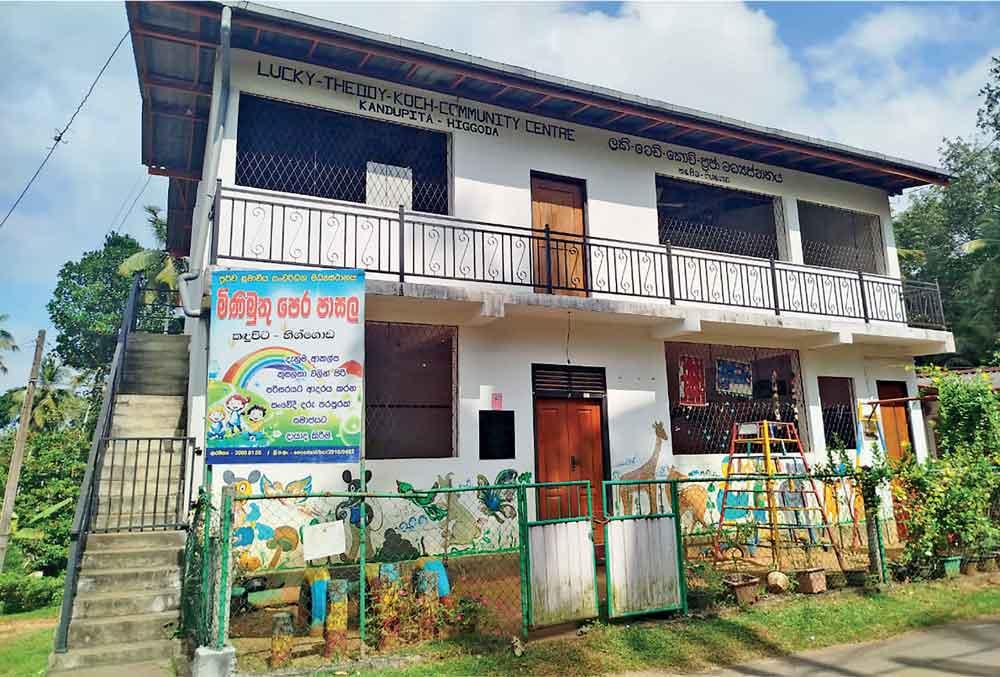
The Lucky–Theddy–Koch Community Centre located in Kandupita Higgoda in Kegalle District
 The Lucky–Theddy–Koch Community Centre, a modest two-storey structure, stands as the most prominent landmark greeting those who visit or pass through the village of Kandupita Higgoda. What’s amazing is that this community centre has served the community for six decades. For many, Higgoda is an unfamiliar name; for others, it is associated with the determination of three young men who sought to empower a rural community to become self-reliant.
“Decentralised leadership should make it possible for each family to participate and not having to wait for the President or the Secretary of a society to act. When the adjoining villagers realised that the cluster system was a success, they too wanted our help”
- Lakshman Mahanama (Former volunteer)
 Two strangers
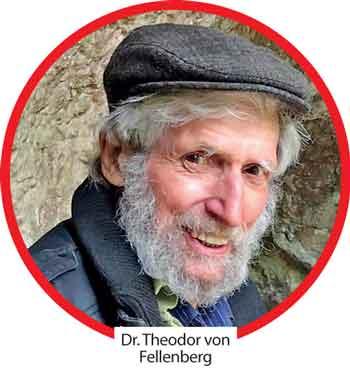
In 1964, Dr. Theodor von Fellenberg, widely known as Theddy, was working with the Swiss Government on programmes aimed at addressing poverty in Asia, Africa and South America. At the time, he was uncomfortable with the idea of Europeans “bringing progress” to developing countries, a concept that suggested these communities were unable to improve their lives on their own. This led him to undertake a village-based study.
The study, which was part of his doctoral dissertation, observed how village life changes and develops from the ancestors to the young generation independent of external assistance. Dr. Fellenberg chose the rural village of Higgoda in the Kegalle District. He was already familiar with Sri Lanka, having visited in 1960 as one of the country’s first international volunteers.
Lakshman Mahanama, widely known as Lucky, joined Dr. Fellenberg as his companion and interpreter. The two arrived in Higgoda without knowing anyone. As they rested under a palm tree, villagers approached them and took them to Mudiyanse, the village teacher. After hearing the reason for their visit, Mudiyanse welcomed them and invited them to stay at his home. Word soon spread that a foreign researcher and a young man from Colombo had come to the village, and residents gathered in large numbers to see them.
As the pair went from house to house collecting information, families took turns feeding them. For several weeks, they lived much like the villagers, most of whom depended on agriculture. They ate together, dressed like the locals, joined in song and dance, and helped with farm work, including ploughing paddy fields. Mallika Senehelatha, who was seven years old at the time, still remembers “Theddy Maama” working in the fields wearing a sarong and chewing betel. Today, she is a retired Director of a rubber export company in the vicinity.
While the study was ongoing, Dr. Fellenberg and Mahanama, along with their friend D. A. Abeysekera, who was then a Senior Officer at the Department of Rural Development, began working towards making the Higgoda community more self-reliant, setting it apart from neighbouring villages.
 Empowering a community
When Dr. Fellenberg and Mahanama first arrived in Higgoda in May 1964, the village was home to nearly 75 families. Most lived in low-income households made of thatched coconut leaves and relied on agriculture for their income. Even the village path was challenging, with leeches a constant nuisance for anyone stepping outside.
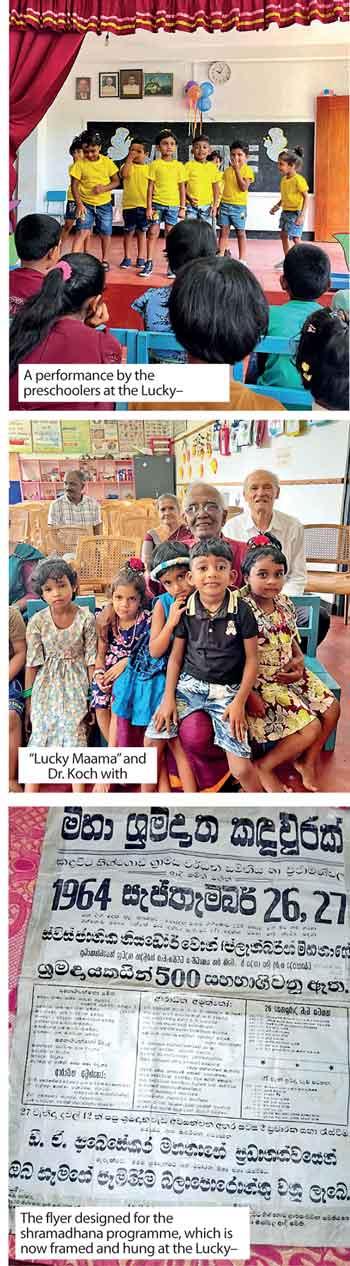
One of the earliest steps in revitalising the village was the construction of a 2 kilometre road from Ganewatte to the Higgoda state plantations, frequently used by villagers. The project was carried out through a shramadhana — a voluntary, community-based effort for public benefit. Using his experience in organising shramadhana programmes, Abeysekera, along with Dr. Fellenberg and Mahanama, coordinated a large-scale campaign on September 26 and 27 1964. Hundreds joined, including representatives from government institutions, schools, social welfare organisations from Colombo, and Rural Development Societies from neighbouring villages. The Embassy of Switzerland in Sri Lanka and foreign monks also participated.
In May 1965, Mahanama returned to Higgoda as a volunteer for one year. During this time, members of the Rural Development Society helped build a community hall. Mahanama conducted classes for villagers and invited lecturers from universities to provide essential knowledge. Lessons included English, mathematics, sewing, music, dancing, and sports among other activities. He also started a children’s society, a youth society, a local savings movement, and other programmes. Some of these societies are still active at present.
To ensure active participation from all households, Abeysekera introduced a cluster system in 1964, dividing the village into five clusters: Maithree, Karuna, Muditha, Upekka, and Shanthi. Each cluster met weekly in members’ homes to discuss solutions to daily or long-term economic, social, and cultural challenges. The system encouraged cooperation, mutual trust, and harmony, while discouraging conflicts and negative emotions such as greed, jealousy, anger, pride, and arrogance. Any unresolved issues were referred to the Rural Development Society.
“Decentralised leadership should make it possible for each family to participate and not having to wait for the President or the Secretary of a society to act. When the adjoining villagers realised that the cluster system was a success, they too wanted our help. I was able to assist, guide and make them understand our philosophy. Most of the neighbouring villagers felt that Higgoda was a model village,” Mahanama recalled. He left the village in May 1966, but remains in touch with its residents to this day.
The cluster system eventually stopped functioning, partly due to the absence of a strong leader and the impact of the youth insurrection in 1971. Yet, according to K. A. Waidyasekara, a retired school principal and resident of Higgoda, the sense of harmony and community, of self-help fostered by the cluster system is still evident in the village today.
The Higgoda Primary School opened in 1960, serving children in the village up to grade 5. At the time, only children of public servants living in Higgoda attended schools in the town.
According to Chandra Jayasinghe, a retired school principal, the student population at Higgoda Primary School was 94 in 1986. As the village’s economic situation improved thanks to farmers cultivating alternative crops, better transportation, and other technological advances, more families began sending their children to schools in town. With the number of students gradually declining, the school eventually had to cease operating.
At present, the school building remains run down. Villagers are requesting that the six-acre site be used to build a facility for the Rural Development Society, which could host village meetings and other events, while the remaining land could be used for agriculture.
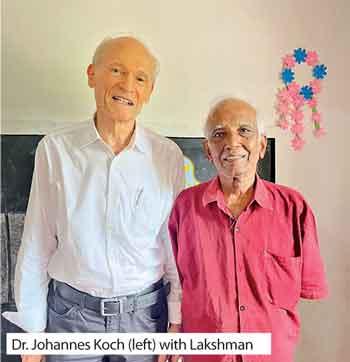 Meanwhile, the Higgoda preschool, established in the 1990s through the efforts of Dr. Fellenberg, Mahanama and Dr. Johannes Koch, continues to operate. Dr. Koch, a Swiss national introduced to Higgoda in 1990 by Dr. Fellenberg, renovated the community hall. He continues to support the preschool with a nutritious meal programme and a teacher’s allowance. This community hall was later named the Lucky–Theddy–Koch Community Hall, where classes such as dancing and sewing are held in addition to the nursery school.
Mahanama also mentioned that the Foundation for Peace and Love has been instrumental in supporting this community development project since 2000.
‘Villagers in command’
While data was gathered from every household in Higgoda in 1964, 1994 and 2014, villagers were encouraged by Dr. Fellenberg and Dr. Koch to document their daily lives — their work as farmers, craftsmen, and teachers — and to reflect on whether progress had made them happier. Over the decades, the village maintained a remarkable record: no crime, no unemployment, and no alcoholism. The findings of the 1994 study were compiled into a book titled “Gama Pipide,” or “A Village Speaks Out.” Representatives from Higgoda presented the study to then Prime Minister Sirimavo Bandaranaike.
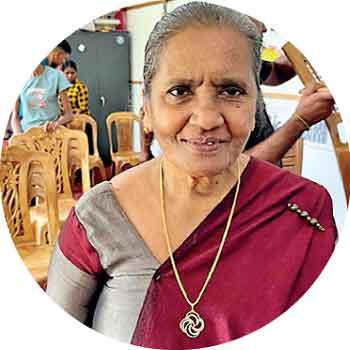 |
| Mallika Senehelatha was seven years old when “Theddy Maama” first arrived in Higgoda in 1964 |
In 2014, the village marked the 50th anniversary of “Theddy Maama’s” arrival with a publication sponsored by the Embassy of Switzerland in Sri Lanka titled “50 Years of Higgoda: A Social Laboratory in Rural Sri Lanka (1964–2014).” Dr. Koch notes in the book that while most material innovations in the village came from external influences, internal changes, such as social relationships, ethical values, and individual behaviour, remained under the control of Higgoda’s residents. “This shows that Higgoda has internal family-based strengths that withstood outside pressures. Three local institutions, the police, the temple, and the school contributed to this. I am grateful to the people of Higgoda for showing us that villagers in command is not an illusion but a reality. Higgoda has developed self-reliance and responsibility,” he wrote in the publication. In 2024, the Youth Society of Higgoda organised a regional volleyball tournament and a village marathon to celebrate 60 years of “Theddy Maama’s” arrival.
Although Dr. Fellenberg passed away in 2023, he reflected in the final publication: “I was thrilled when Lucky told me in 2013 that the youth club and senior citizens wanted to evaluate Higgoda’s development over two generations, which is 50 years. The dream I had in 1964, that Higgoda should serve as a laboratory for studying social, cultural, and economic change in a rural community, has come true without any intervention from my side. This was the greatest gift I received in the 80th year of my life. Politicians speak about democracy, but democracy means people deciding for themselves about their lives and the welfare of their community. This humble book shows the people of Higgoda reflecting on their village and values, and what makes them happy or unhappy.”
Over 60 years later, Higgoda continues to thrive. While agricultural work has declined as villagers have been drawn into the wider world seeking more stable and lucrative careers in fields such as engineering, nursing and banking, the village remains a model of harmony and self-reliance, one where doors of homes and shops can still be left unlocked.
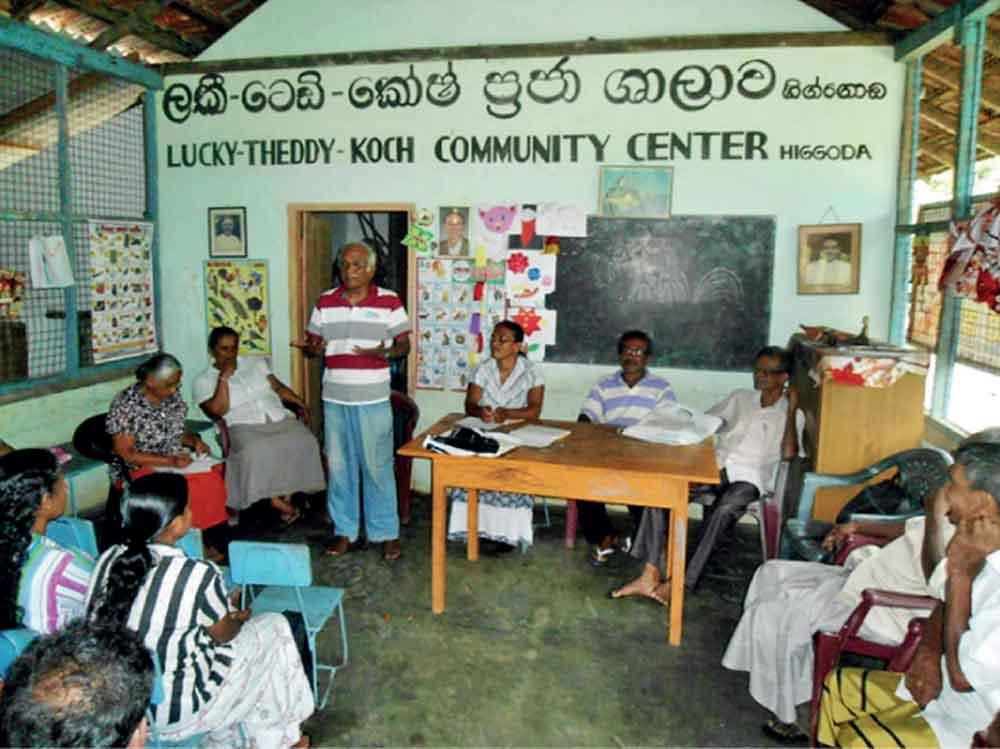
“Lucky Maama” addressing the members of the Welfare Society in Higgoda
07 Jun 2026 3 minute ago
07 Jun 2026 11 minute ago
07 Jun 2026 16 minute ago
07 Jun 2026 35 minute ago
07 Jun 2026 2 hours ago