23 Feb 2026 - {{hitsCtrl.values.hits}}
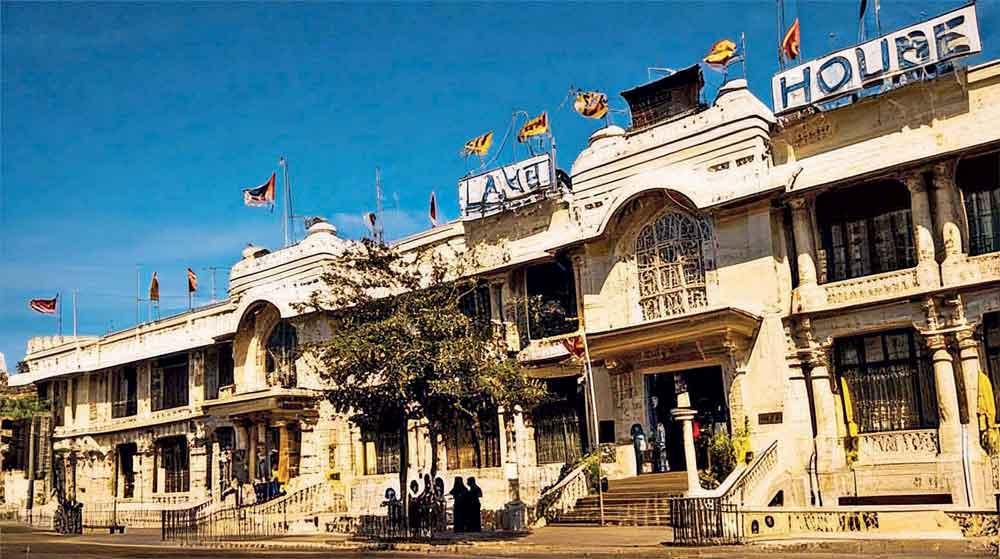
Lake House
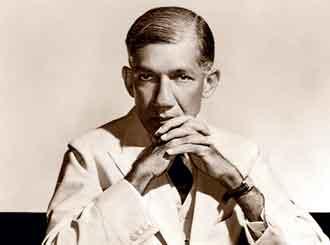
Today marks the birth anniversary of Don Richard Wijewardene (1886–1950), a man whose name is synonymous with the foundation of modern Sri Lankan journalism and the intellectual backbone of the nation’s independence struggle. While other freedom fighters took to public platforms to sway crowds with oratory, Wijewardene operated as a “process of nature”—quietly, persistently, and with a vision that reshaped the destiny of a colony into a sovereign state.
Early Vision and the Cambridge Influence
|
D. R Wijewardene |
Born on February 23, 1886, to a prominent family in Sedawatte, D. R. Wijewardene’s path toward nationalism was paved during his undergraduate days at Peterhouse, Cambridge. It was here, in the heart of the British Empire, that he witnessed the burgeoning unrest in India led by figures like Lala Lajpat Rai and Bepin Chandra Pal. These encounters instilled in him a critical realization: independence could not be won through sporadic agitation alone; it required a structured, educated, and national consciousness.
Upon returning to Ceylon in 1912 as a barrister, Wijewardene briefly practiced law but soon recognized that his true calling lay in the organizational and communicative aspects of the independence movement. He was not a man of the limelight; he preferred the “backstage” where he could meticulously plan the strategy for constitutional reform.
The Power of the Press: Lake House
Wijewardene’s most enduring legacy is the establishment of the Associated Newspapers of Ceylon Limited (ANCL), famously known as Lake House. He understood that to challenge British rule, the Ceylonese people needed a voice that spoke to them in their own languages and with a unified national spirit.
In 1914, he acquired the Sinhala Daily Dinamina, followed by the launch of the Ceylon Daily News in 1918. By consolidating these and other publications like the Tamil Thinakaran under ANCL in 1926, he created a media empire that became the dread of some politicians and always sought after by others for advice. Through these papers, he educated the masses on their «inalienable right» to self-government, refusing to settle for piecemeal concessions from the colonial administration.
Organizational Prowess and Political Lobbying
Beyond the press, Wijewardene was a pivotal figure in the formal political structures of the era. He served as the Secretary of the Ceylon National Association in 1913 and later became a founding member and Joint Secretary of the Ceylon Reform League and the Ceylon National Congress.
His influence extended to the highest levels of British policy-making. He organized the first deputation to the Secretary of State for the Colonies, which successfully secured a seat for Ceylonese in the Legislative Council. His close links with the Donoughmore and Soulbury Commissions, as well as his association with constitutional expert Sir Ivor Jennings, were instrumental in drafting the framework that eventually led to freedom on February 4, 1948.
Reclaiming National Identity
A lesser-known but deeply symbolic achievement was his effort to restore the national flag. Along with E. W. Perera, Wijewardene traced the banner of the last King of Kandy, Sri Wikrama Rajasinghe, to the Royal Hospital Chelsea in London. The recovery of this flag provided a focal point for the nationalist movement, eventually becoming the flag of the Dominion of Ceylon at independence.
The Strategic Partnership with D.S. Senanayake
While Don Stephen (D.S.) Senanayake was the charismatic Father of the Nation and the public face of the struggle, D.R. Wijewardene was his trusted strategist. Their relationship was built on a division of labor: Senanayake handled the grassroots and the British officials, while Wijewardene handled the intellectual discourse and public opinion.
The “Midnight Oil” at Lake House: It is documented that during the 1940s, as the Soulbury Commission was being finalized, Senanayake would often visit Lake House late at night. In the quiet of Wijewardene’s office, they would pore over draft constitutions and diplomatic telegrams. Wijewardene’s newspapers would then predict or suggest certain constitutional moves, effectively preparing the public for Senanayake’s next political maneuver.
A United Front: When internal fractures threatened the Ceylon National Congress, it was Wijewardene’s counsel that helped Senanayake maintain a unified front. Wijewardene used his editorial columns to bridge the gap between various ethnic and religious factions, ensuring that the British could not use the divide and rule tactic to delay independence.
The Quest with E.W. Perera: Finding the Lion Flag
The story of the national flag is perhaps the most stirring anecdote of Wijewardene’s collaboration with the scholar and politician E.W. Perera.
The London Discovery: In 1908, while studying in London, Wijewardene and Perera embarked on a mission to find the banner of the last King of Kandy, which had been taken by the British in 1815. They spent weeks scouring military archives until they finally located it at the Royal Hospital Chelsea.
The Return of Pride: Wijewardene did not just find the flag; he used his resources to have color reproductions made and published in the Dinamina. This was a masterstroke of psychological warfare against colonial rule. By placing the image of the Lion Flag in the hands of thousands of Ceylonese, he instantly revived a sense of national identity that had been suppressed for nearly a century.
The “Silent” Reformer: Dealing with British Governors
Unlike the more radical agitators of the era, Wijewardene’s method with leaders like Sir Ponnambalam Ramanathan and Sir James Peiris was one of “constitutional agitation.”
The 1915 Riots: During the dark days of the 1915 riots, when the British administration dealt harshly with local leaders, Wijewardene worked tirelessly behind the scenes to secure their release. He funded the legal battles and used his international contacts to ensure the British Parliament was informed of the injustices happening in Ceylon.
The Intellectual Architect: He was instrumental in bringing Sir Ivor Jennings, the world-renowned constitutional expert, to Ceylon. By fostering this relationship, Wijewardene ensured that when the time came for independence, the nation had a “watertight” legal framework that the British could not easily dismiss.
A Legacy of Philanthropy and Faith
D. R. Wijewardene’s contribution to Sri Lanka was not confined to the newsroom or the halls of government. His vision for a free nation was holistic, encompassing the intellectual growth of its youth and the spiritual preservation of its heritage.
The Intellectual Architect: Support for Higher Education
D. R. Wijewardene was a firm believer that a sovereign nation required a robust intellectual foundation. He was a pioneering proponent for a national university and is widely recognized as one of the key figures in the “Battle of the Sites” that eventually led to the university’s establishment.
He played a foundational role in building the University of Ceylon’s library system through substantial personal bequests and strategic acquisitions.
Wijewardene Hall
In recognition of his immense services to the institution, one of the residence halls at the University of Peradeniya—originally part of the University of Ceylon—was named in his honor. This hall continues to house students, standing as a living monument to his dedication to education.
A Treasure of Knowledge: Wijewardene bequeathed an invaluable collection of rare materials to the university library. This included the Ferguson Collection and the W.A. de Silva Collection, which comprise thousands of rare books and maps on Indology and Sri Lankan history. By donating these works, he ensured that future generations of scholars would have access to the nation’s rich intellectual heritage.
Scholarships and Grants: He funded numerous scholarships and provided critical financial support to help the university establish its roots, believing that education was the most powerful tool for national progress.
Guardian of Faith: Restoring a Buddhist Heritage
Growing up in a family deeply rooted in Buddhist traditions, Wijewardene viewed the restoration of sacred sites as a patriotic duty.
The Kelaniya Raja Maha Viharaya: While his mother, Helena Wijewardene, is famously credited with the 1927 restoration of the Kelaniya Temple, D.R. and his brothers were instrumental in supporting this massive undertaking. They helped transform the temple into a gallery of modern Sinhala art, commissioning the renowned artist Solius Mendis to paint the iconic murals that depict the history of Buddhism in Sri Lanka.
Sangharama and Buddhist Literature: Beyond physical temples, he was a patron of Buddhist literature. He used his printing presses to publish and disseminate Dhamma books, making the teachings of the Buddha accessible to the common man at a time when colonial influences were dominant. He envisioned and personally funded the Sangharama at Peradeniya University to enable undergraduate bhikkhus to have access to higher learning in a monastic environment not too far and not too near the other halls of residence.
Through these acts of munificence, D. R. Wijewardene ensured that when Sri Lanka finally gained independence, it did so as a nation that was not only politically free but also culturally confident and intellectually prepared for the future.
Legacy of a Patriot
D. R. Wijewardene died on June 13, 1950, just two years after seeing his lifelong dream of a free Sri Lanka realized. He did not seek high office or personal glory, yet his impact on the nation’s literacy, political awareness, and cultural heritage is immeasurable. He bequeathed a wealth of knowledge to the University of Ceylon, of which he was a founder, and principles of “truth, honesty, and courage” continue to serve as a benchmark for journalism in the country.
We remember him today, as a man who proved that the pen, when guided by unwavering patriotism and organizational genius, is indeed mightier than the sword of any empire.
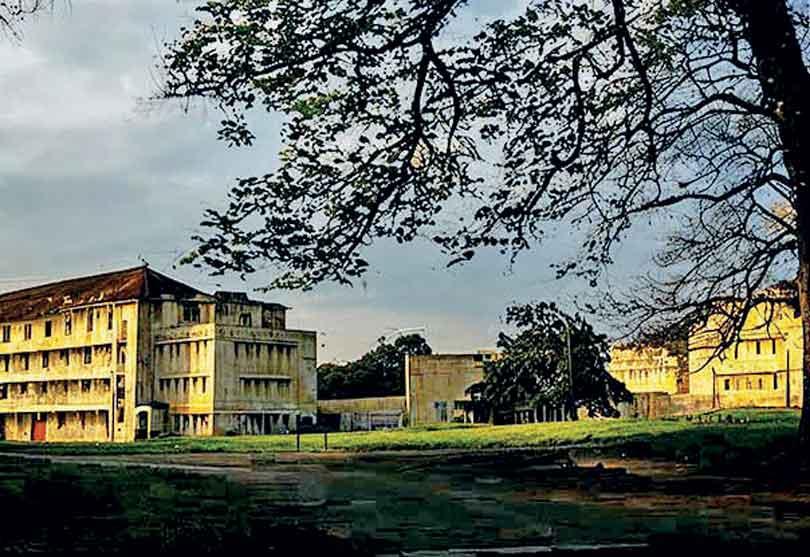
Wijewardene Hall University of Peradeniya
08 Jun 2026 1 hours ago
08 Jun 2026 1 hours ago
08 Jun 2026 2 hours ago
08 Jun 2026 2 hours ago
08 Jun 2026 2 hours ago