15 Oct 2025 - {{hitsCtrl.values.hits}}
By Darshana Sanjeewa Balasuriya
 |
| Deelaka Pitagampola Pic by Nisal Baduge |
Amid the government’s push to promote electric vehicles (EVs) as a key step toward reducing air pollution and advancing renewable energy, public interest in EVs is reportedly declining, the Electric Vehicle Owners Association (EVOA) has warned.
The association blamed recent actions by Sri Lanka Customs, which has detained over 1,000 BYD vehicles, for creating uncertainty in the market and disrupting consumers who have already invested in EVs.
In July 2025, Sri Lanka Customs detained two BYD shipments belonging to John Keells CG Auto. Following the filing of a writ application, Customs agreed on August 7 before court to release 991 vehicles upon a bank guarantee, and a further 506 vehicles on September 3. However, another 1,000 BYD vehicles have now been detained. Earlier, this week, John Keells CG Auto (Pvt) Ltd, the authorized distributor of BYD vehicles in Sri Lanka, emphasized the necessity of expediting the release of BYD vehicles detained by the Sri Lanka Customs. >>A2
It was reported that Sri Lanka Customs has detained over 1,000 BYD vehicles, primarily due to allegations that the imported vehicles had their motor capacity declared lower than it actually is, which would result in lower import duties.
The EVOA warned that this move could affect thousands of consumers who have already purchased EVs or paid advance deposits. According to the association, at least 10,000 consumers have purchased electric vehicles and plug-in hybrid vehicles over the past six months.
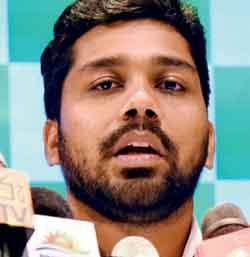
EVOA Convener Deelaka Pitagampola urged the government to intervene and streamline the EV import process.
He stressed that Customs’ refusal to accept Manufacturer Certificates and the lack of internationally recognized laboratories to verify motor power has created confusion and undermined consumer confidence. “Verification of motor power can only be reliably done in laboratories equipped with modern technology. Any local inspection without such facilities will not satisfy all parties and will worsen the situation,” he said.
Pitagampola also clarified that while Sri Lankan universities and experts possess the knowledge, they currently lack the laboratory infrastructure required for accurate testing. He warned that any report issued by a Customs-appointed committee without proper verification could further complicate the crisis and harm EV consumers.
The association urged Customs to immediately obtain independent verification from internationally recognized laboratories to confirm the motor power of the detained vehicles. They stressed that delays are discouraging private sector investment in EV battery charging infrastructure and service centres, jeopardizing job creation and Sri Lanka’s long-term goal of becoming a carbon-neutral country by 2050.
Following the growing demand for EVs in Sri Lanka, efforts were launched to establish EV charging infrastructure across the country. It has been reported that there are currently around 150 EV charging points in operation, but it was reported that at least 1,000 charging points are needed nationwide to adequately meet the requirements of EV owners and support the wider adoption of electric vehicles.
“Consumers who have already invested in EVs are facing unnecessary difficulties. The responsible authorities must act promptly to resolve this crisis,” the association said.
They also accused some officials of allowing the uncertainty to persist, warning that such actions risk undermining the EV market under the guise of a tax issue.
“We urged all stakeholders to protect the rights of citizens to purchase electric vehicles at reasonable prices and to prevent attempts to cripple Sri Lanka’s growing EV sector,” the association said.
05 Jun 2026 14 minute ago
05 Jun 2026 27 minute ago
05 Jun 2026 49 minute ago
05 Jun 2026 1 hours ago
05 Jun 2026 2 hours ago