20 Mar 2025 - {{hitsCtrl.values.hits}}
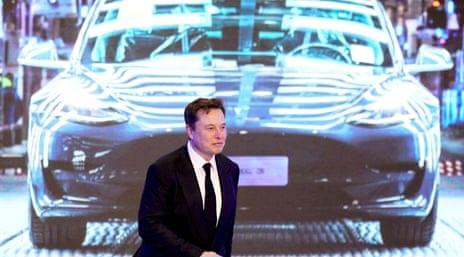 In recent years, the growing influence of tech moguls like Elon Musk has become a defining force in global politics and economics, particularly in Europe. Elon Reeve Musk, a businessman renowned for his leadership roles in Tesla, SpaceX, and Twitter (now X), has expanded his influence beyond the tech industry. Since 2025, Musk has also served as a senior advisor to U.S. President Donald Trump and the de facto head of the Department of Government Efficiency, further consolidating his political clout. Musk has leveraged his wealth, platform, and political connections to exert significant sway over political discourse, often aligning himself with far-right ideologies. His political activism, including support for figures like Trump, has raised concerns about the intersection of corporate power and political influence, especially in Europe.
Musk’s far-right leanings have disrupted European politics, with his support for parties and movements that challenge the EU's foundational values of democracy and unity. This growing influence, coupled with his controversial actions, has had practical consequences for his businesses. Tesla, in particular, has seen a significant decline in sales across Europe, as many consumers express distaste for Musk’s political views. In the face of these challenges, the European Union finds itself grappling with a new kind of political influence—one that threatens its regulatory frameworks and its commitment to democratic governance.
Musk’s role in boosting far-right politics in Europe
Over the past few months, Musk, backed United States President Donald Trump, has emerged as an outspoken promoter of far-right ideologies in Europe, leveraging his massive social media platform, X (formerly Twitter), to amplify extremist voices and political causes.
The most notable instance of Musk's political advocacy came in Germany, where he repeatedly boosted the Alternative für Deutschland (AfD), a far-right political party that is known for its nationalist, anti-immigration, and anti-European Union stances. Musk's posts included endorsements and interviews with AfD leaders, including Alice Weidel, the party’s co-chair, whose views have frequently drawn criticism for being linked to extremist rhetoric.
Musk’s promotion of the AfD and other far-right groups is not an isolated occurrence. He has also waded into British politics, calling for new elections and supporting right-wing populists like Reform UK, a party that shares many of the same anti-immigrant and anti-climate change platform points as figures like Donald Trump.
Similarly, in Italy, Musk has formed a close relationship with Prime Minister Giorgia Meloni, aligning with her concerns over immigration and demographic decline. Musk's outspoken support for these movements reflects his broader political philosophy, which champions deregulation, market freedoms, and opposition to what he views as bureaucratic interference from entities like the European Union.
In Romania, he has promoted posts about far-right politician Calin Georgescu and excoriated one of the judges who annulled Georgescu’s presidential bid last year due to suspected Russian interference.
U.S. tech platforms such as X have “immense power” to shape public opinion in Europe, said Damian Tambini, a specialist in media and communications regulation and policy at the London School of Economics.
“It’s not so beyond the realm of possibility that (Musk) could flip a country politically,” said Tambini. “That in turn would create a completely different balance of power” inside the EU, as far-right government’s gain further influence in the already fractious 27-nation bloc. Those governments could potentially help Musk undo or water down regulations he didn’t like, said Tambini.
Musk, who leads Trump’s efforts to slash the size of the U.S. federal workforce, has publicly criticized European business regulations, calling them bad for growth and a form of censorship. He has been under investigation by the EU for more than a year for potential breaches of a recent European law intended to ensure social platforms such as X police illegal content. The decision is still pending.
Under the EU’s Digital Services Act, X could face a fine of 6% of its annual global revenue for failing to tackle illegal content and disinformation or follow transparency rules. The case is a major test of the EU’s ability to enforce rules on American social media companies as it seeks to tackle illegal content and disinformation.
There have been other signs of regulatory concern over Musk’s platform in Europe.
On February 7, a German court ruled that X must release information enabling researchers to track the spread of election-swaying information on the platform under EU laws. On the same day, French prosecutors said they were investigating claims that X distorted its algorithms to manipulate discourse.
While Musk’s influence on the far-right has been controversial, there is little doubt that his messages resonate with a growing wave of populism across Europe. The AfD, despite its controversial platform, surged to second place in the German election, with Musk’s promotion playing a role in making the party appear more mainstream, particularly among younger voters. While some analysts downplay his direct impact on elections, they agree that his branding has helped normalize far-right views, portraying them as fresh and innovative, rather than extremist and dangerous.
Tesla sales plummet in Europe, and stock shares fall
Despite his increasing political influence, Musk’s actions have had adverse consequences for Tesla, the electric vehicle company he leads. Tesla’s sales in Europe have plummeted, with reports indicating a massive 45% decline in January sales compared to the previous year. In key markets such as Germany, Italy, and France, the downturn has been even more stark, with sales dropping by as much as 76% in Germany and 55% in Italy. This sharp decline is taking place in a growing market for electric vehicles (EVs), which saw overall sales rise by more than 37% in Europe during the same period.
Many of these losses can be attributed to the growing distaste for Musk’s personal politics among European consumers, who are increasingly reluctant to purchase products associated with the controversial tech mogul. In the UK, for example, a survey found that 59% of potential EV buyers would refuse to buy a Tesla because of Musk’s views. There has also been a steep decline in China – a key market – and Australia.
Some experts have said Tesla is over-valued, so the fall is seen as a correction, while others have pointed to rising competition from some of China's electric vehicle companies. There have also been concerns that Musk has not been focusing enough of his attention on his firms.
This reflects a broader sentiment in Europe, where Tesla's brand is increasingly seen as tainted by Musk's far-right political activism. In some instances, Tesla vehicles have become the target of anti-Musk campaigns, with hashtags like #TeslaTakedown trending on social media platforms.
Activists have lately staged so-called Tesla Takedown protests to voice displeasure over Musk's role in sweeping cuts to the federal workforce at the behest of Trump and cancellation of contracts that fund humanitarian programs around the world. About 350 demonstrators protested outside a Tesla electric vehicle dealership in Portland, Oregon, last week, while nine people were arrested during a raucous demonstration outside a New York City Tesla dealership earlier in March.
There have also been media reports of vandalism on Tesla vehicles and showrooms that are under investigation.
Meanwhile, President Donald Trump, in a show of support for Musk, said that violence against Tesla dealerships will be labeled domestic terrorism and perpetrators will "go through hell,". Musk, is spearheading the Trump administration's Department of Government Efficiency, or DOGE.
Moreover, the impact on Tesla’s stock market performance has been equally damaging. Tesla’s stock has experienced a dramatic decline in value, with shares falling by more than 50% from their peak in December 2024. Analysts have attributed part of this drop to Musk’s political activism, with concerns about his focus on politics detracting from his leadership of the company. Investors are wary of Musk’s entanglement in political controversies, which they fear could erode Tesla’s brand and alienate key international markets.
Alongside Tesla, his businesses include Space X, which has experienced serious failures in the last two launches of its giant Starship rocket, and the social media network X, which suffered an outage recently.
How should Europe respond to trump and Musk’s new imperialism?
As Musk's influence in European politics grows, many are questioning how Europe should respond to the rise of plutocratic power—especially as figures like Musk, alongside U.S. President Donald Trump, push for deregulation and policies that could fundamentally alter the political landscape. Europe’s response to the growing influence of tech oligarchs like Elon Musk and political figures such as Donald Trump requires a strategic, multifaceted approach.
One of the first steps Europe should take is to separate discussions about digital platform regulation from broader trade policy and security concerns. If the US threatens to impose tariffs or leverage trade policies in response to EU regulations on tech platforms, the EU must be ready to defend itself. The EU has established mechanisms to counteract such pressures, including the use of retaliatory tariffs or other legal tools within its trade framework. These should be used decisively to protect Europe's autonomy. Additionally, the EU should stand firm if the US attempts to tie support for Ukraine to policies regarding digital platforms. The EU should underscore the shared strategic risks posed by a weakened Ukraine, which only serves to strengthen Russia and bolster China—both of which threaten global stability. Europe’s commitment to Ukraine should not be conditioned on digital policy concessions but should instead be recognized as a matter of preserving global security and democratic values.
Another approach Europe could take is to strengthen its regulatory framework to counterbalance the influence of powerful individuals like Musk. The EU’s Digital Services Act (DSA) is one potential tool, as it seeks to hold tech companies accountable for the content they host and the ways they influence public discourse. Musk’s platform X is currently under investigation by the EU for potential breaches of this law, and there are calls for the EU to take stronger action against social media giants that contribute to disinformation, hate speech, and the normalization of extremist political views.
Europe is not alone in confronting the growing power of tech companies. Other countries, including Brazil and the United Kingdom, are also resisting the influence of tech giants that seek to undermine national sovereignty. The EU has an opportunity to build a coalition with these nations and others that share its concerns about the harmful impact of unchecked tech power on democracy and social cohesion. Such a coalition could be a powerful force for safeguarding digital and technological sovereignty. By working together, democracies around the world can create a unified front against tech oligarchs who seek to manipulate political systems and undermine public trust. This could involve collaborating on common regulatory frameworks, sharing best practices, and supporting each other in defending democratic values against external interference.
In addition to regulating tech platforms, the EU could look to safeguard its democratic institutions by pushing back against populist forces that seek to undermine the European project. By reinforcing the importance of the EU’s values of unity, democracy, and social justice, European leaders could counter the divisive and destabilizing effects of far-right movements that Musk supports. This could include stronger protections against mass surveillance, disinformation campaigns, and anti-immigrant rhetoric, all of which Musk has amplified through his social media activity.
Furthermore, Europe must consider the broader geopolitical implications of Musk’s growing alliance with Trump and other right-wing populists. Musk’s increasing influence could help shift European politics away from multilateralism and toward more nationalistic, isolationist policies. This would not only weaken the EU’s global standing but could also undermine its ability to tackle pressing issues such as climate change, digital regulation, and global security. To counter this, the EU could foster greater unity among its member states and invest in initiatives that promote democratic values, social cohesion, and equitable economic development.
For Europe, the growing influence of figures like Musk presents a challenge to its political cohesion and democratic integrity. As the EU faces mounting pressure from external forces, it must decide how best to respond to the growing power of tech oligarchs and populist leaders. Strengthening regulations, reinforcing democratic values, and fostering European unity will be key to navigating the challenges posed by Musk and his political allies in the years to come. The EU must be resolute in its commitment to democracy, digital sovereignty, and geopolitical stability, ensuring that its response to figures like Musk and Trump preserves Europe’s autonomy and political integrity.
29 Jun 2026 24 minute ago
29 Jun 2026 42 minute ago
29 Jun 2026 3 hours ago
29 Jun 2026 3 hours ago
29 Jun 2026 3 hours ago