13 Oct 2025 - {{hitsCtrl.values.hits}}
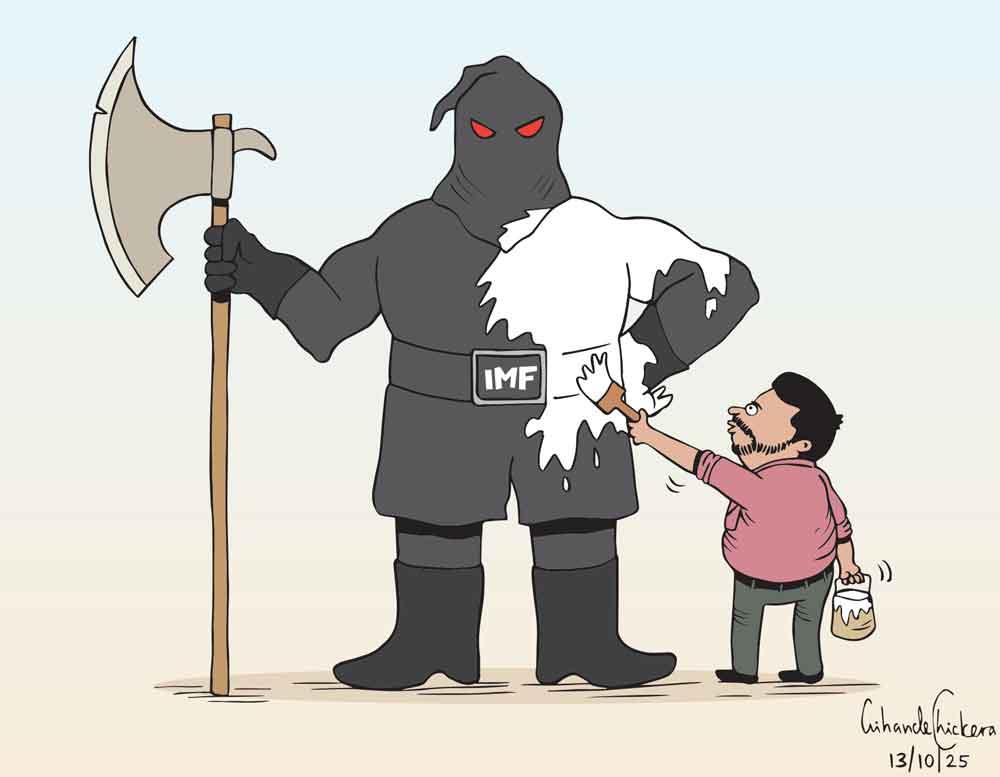
In this hauntingly sharp cartoon, the symbolism is both immediate and unsettling. A menacing, hooded figure—labeled IMF—stands like an executioner, axe in hand, while a smaller man, representing the local government, earnestly paints the figure white. The message is unmistakable: what’s being portrayed as reform, partnership, or “economic rescue” is, in truth, an attempt to whitewash a harsh and punitive reality.
The IMF executioner, dressed in black and bearing a weapon, embodies the global financial institution’s reputation in the developing world—a bringer of austerity, not relief. Its red, glowing eyes suggest danger and domination, evoking the fear that IMF programs often inspire. The axe symbolizes the economic “discipline” that comes with structural adjustment: cuts to social spending, privatization, and fiscal tightening that disproportionately harm the poor.
Yet the smaller man’s act of painting over the black surface with white is the cartoon’s most devastating metaphor. It captures how governments, particularly those desperate for legitimacy, try to rebrand these austerity measures as necessary medicine, even salvation. The paint becomes a tool of deception—a cosmetic effort to make the executioner look like a savior.
The irony runs deep. The white paint, meant to symbolize purity, renewal, or transparency, is applied onto an inherently destructive figure. It will never truly transform the IMF’s nature—it only masks it. The leader’s expression of focus and pride reflects a broader political phenomenon: governments selling painful reforms as patriotic victories. In doing so, they ignore the widening inequality and suffering such policies often create.
The cartoon’s brilliance lies in its simplicity. There is no blood, no visible violence—but the threat is palpable. The executioner’s axe is poised, and the painter, oblivious or complicit, continues his futile work. It’s a silent indictment of both external power and internal submission.
Ultimately, this is not just about economics—it’s about agency and accountability. The IMF may bring the axe, but it is domestic leaders who choose to wield the brush. The cartoon forces us to confront a painful question: are we victims of global systems, or willing participants in our own economic undoing?
In the end, the white paint will dry, but the black figure beneath—and its axe—will remain.
15 Jun 2026 8 minute ago
15 Jun 2026 22 minute ago
15 Jun 2026 1 hours ago
15 Jun 2026 3 hours ago
15 Jun 2026 3 hours ago