10 Jan 2026 - {{hitsCtrl.values.hits}}
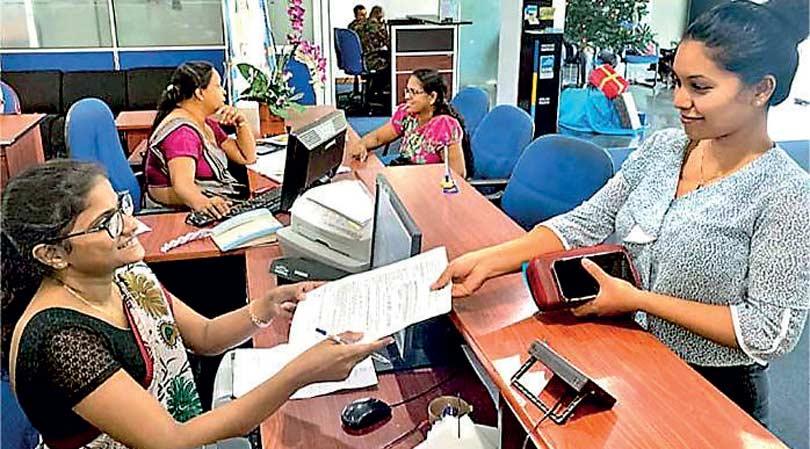 Allowing each commercial bank to independently declare a borrower “non-viable” and proceed with parate execution creates wide scope for inconsistency and arbitrariness
By Anura Lokuhetty
Sri Lanka’s economic recovery is threatened not only by past crises, but by a growing governance vacuum in how financial distress is resolved. Today, the fate of thousands of small and medium enterprises (SMEs)—many affected by terrorism, pandemics, economic collapse, and natural disasters—rests almost entirely with individual commercial banks. This concentration of power, exercised through unilateral parate action, poses serious risks to fairness, transparency, and long-term economic stability.
SMEs in tourism, agriculture-linked services, manufacturing, and regional enterprises did not fail in isolation. Their distress stems from nationally recognised systemic shocks—the Easter Sunday attacks, Covid shutdowns, currency collapse, extreme interest rate volatility, and repeated climate-related disruptions
In no mature financial system should determinations of business viability, recovery options, and asset disposal be left solely to creditor institutions with direct financial interests. Yet in Sri Lanka, there is no independent statutory mechanism empowered to assess whether enforcement action is proportionate, justified, or aligned with the broader national interest. This is a dangerous omission.
SMEs in tourism, agriculture-linked services, manufacturing, and regional enterprises did not fail in isolation. Their distress stems from nationally recognised systemic shocks—the Easter Sunday attacks, Covid shutdowns, currency collapse, extreme interest rate volatility, and repeated climate-related disruptions. Systemic problems demand systemic solutions, not fragmented, bank-by-bank decisions.
Allowing each commercial bank to independently declare a borrower “non-viable” and proceed with parate execution creates wide scope for inconsistency and arbitrariness. Two similar enterprises, affected by identical external shocks, can face entirely different outcomes depending solely on the lending bank. Such unpredictability undermines confidence in the financial system and discourages future investment, particularly in regional and rural economies.
More critically, the absence of independent oversight opens the door to economically and ethically questionable outcomes. Distressed assets—hotels, factories, land, and operating businesses—are often auctioned during depressed market conditions at values far below replacement cost or long-term earning potential. This creates real risk of asset stripping, where strategic assets are transferred at deep discounts while original investors, employees, and communities bear the loss.
When businesses collapse in this manner, the damage extends far beyond shareholders. Jobs disappear, supply chains fracture, tourism-linked villages lose livelihoods, and regional development stalls. This is not merely a borrower–bank issue; it is a socio-economic failure with national consequences.
For this reason, the Central Bank and the Government cannot remain passive observers. Their role is not to protect bad borrowers, but to ensure enforcement mechanisms do not destroy viable economic capacity or facilitate unfair asset transfers under the guise of recovery.
Boxed governance responsibility: Bank boards and SME accountability
Sri Lanka’s commercial banks are governed by experienced Chairmen and Boards of Directors with deep exposure to finance and governance. These Boards cannot treat parate action as a purely operational matter delegated entirely to management.
Boards have a fiduciary and ethical duty to ensure enforcement is proportionate, justified, and applied only as a last resort. This includes actively questioning whether restructuring options have been genuinely explored, whether valuations reflect normalised market conditions, and whether similarly affected borrowers are treated consistently.
Unchecked delegation creates moral hazard. When enforcement decisions proceed without robust board-level oversight, the risks of excessive action, reputational damage, and erosion of trust in the banking system increase sharply.
Given the critical importance of SMEs to employment, regional development, tourism value chains, and economic resilience, there is a strong case for formal SME-sector representation—either at board level or through dedicated board committees. This is not about weakening credit discipline; it is about strengthening informed, ethical decision-making.
Sri Lanka urgently requires an independent statutory mechanism—such as a Financial Distress Review Commission or a strengthened Ombudsman framework—with representation from the Central Bank, Treasury, legal experts, industry specialists, and independent professionals. This body should review calamity-affected SME cases above defined thresholds before parate action is permitted.
Such a mechanism would assess whether distress arises from external shocks, whether recovery options have been exhausted, whether valuations are fair, and whether enforcement serves both financial prudence and national economic interest. Its role is not to undermine banks, but to introduce balance, transparency, and accountability.
International experience shows that economies recover faster when viable enterprises are preserved, not dismantled. Regulatory oversight during systemic stress is not market distortion; it is market protection. Sri Lanka’s recovery cannot be built on fear, uncertainty, and perceived injustice.
(Anura Lokuhetty is a senior hotelier with over 47 years of experience in Sri Lanka’s tourism sector and a long-standing advocate for responsible financial governance and inclusive economic recovery)
18 Jun 2026 2 minute ago
18 Jun 2026 29 minute ago
18 Jun 2026 37 minute ago
18 Jun 2026 39 minute ago
18 Jun 2026 46 minute ago