20 Nov 2025 - {{hitsCtrl.values.hits}}
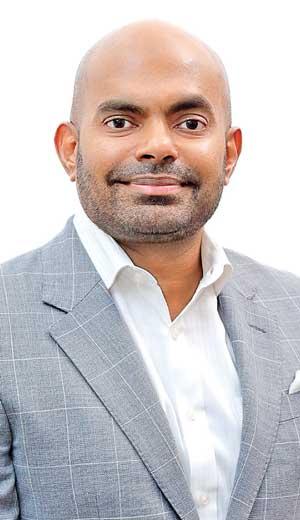 |
| Mr. Romesh Gomez - Managing Director/CEO at WealthTrust Securities Limited |
By Romesh Gomez, Managing Director/CEO – WealthTrust Securities Ltd.
Market Discipline as the Foundation of Stability
Predictable, rules-based market engagement is essential for long-term investor confidence because it creates consistent signaling; investors can understand why yields move, which strengthens trust in the system. For a primary dealer, discipline means bidding and trading based on research, macro perspectives and predefined risk limits rather than reacting to market noise or emotion.
Speculation, particularly in the past, has shown its capacity to distort yields, amplify volatility and ultimately harm both investors and the broader system. While volatility within justifiable ranges can be a trader’s friend, Sri Lanka’s improved regulatory oversight and the widespread availability of information have helped limit excessive speculation. To reinforce discipline, I often share a trading framework encapsulated in the acronym “FEGH”—Fear, Emotion, Greed, Hope. It encourages traders not to fear justified positions, to avoid emotional decision-making, to take profits within target ranges instead of becoming greedy, and to avoid “hoping” that losing trades will reverse. Instead, they must cut losses in line with established limits.
Disciplined institutions also play a vital role in reducing systemic volatility. By managing duration and liquidity prudently, they avoid becoming forced sellers during stressed periods. For primary dealers, quoting two-way prices consistently enables continued market access, providing liquidity when investors need to enter or exit. This function becomes crucial during uncertainty, where credible execution protects clients and prevents disorderly markets. Over the past decade, WealthTrust Securities has delivered consistent profitability even as competitors faced fluctuations, proof that institutional discipline directly supports market stability.
Transparency as a Catalyst for Investor Trust
Transparency is central to building investor confidence because it reduces risk premiums and attracts long-term institutional capital. When investors understand how yields are quoted, how primary dealers generate returns and what risks sit in their portfolios, they require a lower risk premium, which ultimately translates to lower funding costs for the government and economy.
For me, transparency goes far beyond satisfying regulatory reporting requirements. It includes clearly explaining the rationale behind trades and portfolio adjustments, being upfront about losses when markets move unfavourably and giving clients a clear understanding of pricing, spreads and expected returns. In a relatively small market like Sri Lanka, reputation is the biggest asset any institution can hold. WealthTrust has built its reputation through straightforward communication, data-backed insights and clean execution. This clarity has helped us rapidly gain credibility as a standalone primary dealer with an A- rating and positive outlook, achieved without the diversification advantages of large financial groups.
Transparent practices inside the dealing room reinforce this trust. Clear segregation of trading, risk, operations and compliance functions ensures that no conflicts arise. Documented risk limits and escalation processes mean traders know exactly when management intervention is required. Regular client feedback ensures ongoing visibility into portfolios, and our growing investment in digital platforms reinforces our commitment to openness, strong communication, and accountability.
Risk Management in a Volatile Environment
Navigating volatility requires a structured risk framework built around strong systems and conservative assumptions. Interest rate risk is managed through duration limits, scenario-based stress testing and yield curve modelling. Liquidity risk is mitigated through diversified repo counterparties and carefully structured maturity ladders that prevent concentration of refinancing exposures. Counterparty and operational risks are addressed through robust internal controls, compliance mechanisms and periodic audits, while policy risk is managed by continuously monitoring fiscal and monetary developments and adjusting portfolio strategy accordingly.
Well-capitalised primary dealers are essential for a stable government securities market. Strong capital enables them to underwrite auctions with confidence, maintain trading activity during stressful periods and provide continuous liquidity to anchor benchmark yields. As Sri Lanka works to rebuild sovereign credibility following its recent restructuring, the presence of well-managed, risk-aware primary dealers becomes even more critical to restoring investor confidence.
The Strategic Role of Primary Dealers in National Market Development
Primary dealers function as the bridge between the Central Bank, the Public Debt Management Office and investors, underwriting and distributing Treasury Bills and Bonds while ensuring that the secondary market remains active through consistent two-way quotes. Their market-making role keeps liquidity flowing and supports efficient price discovery, both fundamental pillars of a functioning financial market.
Responsible auction participation, driven by fundamentals rather than short-term carry trades, contributes to smoother yield curves and supports predictable borrowing costs for the State, an essential prerequisite for sustainable fiscal planning. Beyond auction performance, investment in talent, research and analytics strengthens the overall national market infrastructure. At WealthTrust, we have built one of the industry’s longest historical rate databases and continually integrate scenario analysis and AI-driven forecasting tools to guide strategy. Our team-based culture, which treats human capital as our most important asset, enhances our ability to lead as a primary dealer. This long-term credibility reinforces trust and broadens investor participation in the domestic debt market.
Technology and Data as Drivers of Market Efficiency
Modern financial markets require digital infrastructure that is real-time, data-rich and frictionless. Trading, risk management and client engagement are increasingly digital, with platforms designed for both institutional and individual investors. WealthTrust became the first primary dealer to launch a secure online Auction bidding platform in July 2024, enabling investors to access auctions, place bids and purchase government securities digitally, significantly expanding market reach.
Data and analytics now drive much of the fixed-income decision-making process. Yield curve analysis helps identify mispricing opportunities; scenario modelling allows teams to anticipate the impact of changes to interest rates, inflation or currency; and deep historical datasets help validate assumptions and refine strategies. Digital onboarding and online account opening make participation more inclusive, extending market access well beyond Colombo. In this way, technology becomes not just an internal efficiency tool but a genuine leveller that benefits the entire financial ecosystem.
A Collective Path Towards a Credible and Resilient Financial System
Rebuilding Sri Lanka’s financial system requires shared commitment from regulators, institutions and investors. Regulators must provide consistent, rules-based policies supported by clear communication. Institutions must adopt genuine governance, ethical conduct and long-term strategic thinking rather than merely ticking compliance boxes. Investors, too, must engage actively, ask questions and adopt a long-term mindset.
For me, governance excellence means boards and management teams that challenge assumptions rather than rubber-stamping decisions. Ethical conduct requires turning down structures that appear profitable in the short term but erode trust in the long run. Capital discipline means building buffers in good periods instead of over-distributing. At WealthTrust, we aim to lead by example through consistent market execution, investment in people and technology and fostering a culture that values teamwork, discipline and integrity.
Sri Lanka’s long-term financial stability will depend on deeper debt markets extending across maturities, stronger investor literacy and sustainable capital flows anchored in confidence. If we collectively anchor ourselves in discipline and transparency, the crisis we have emerged from, and the stability we are beginning to regain, can become a meaningful turning point that leaves our financial system stronger and more credible than before.
14 Jun 2026 29 minute ago
14 Jun 2026 35 minute ago
14 Jun 2026 58 minute ago
14 Jun 2026 2 hours ago
14 Jun 2026 2 hours ago