01 Oct 2020 - {{hitsCtrl.values.hits}}
By Shabiya Ali Ahlam
As the formulation of Budget 2021 nears, the government is urged to explore the possibility of absorbing the cost of providing maternity leave benefits (MLB) by extending to the private sector a tax relief, so that discrimination against women at their childbearing age is discouraged.
Independent economic think tank Verité Research pointed out that by the state allowing private sector entities to set off the cost of MBLs against their taxes, the country would be able to address its ongoing labour shortage issue and improve female participation in the economy, which in turn would help boost growth rates.
|
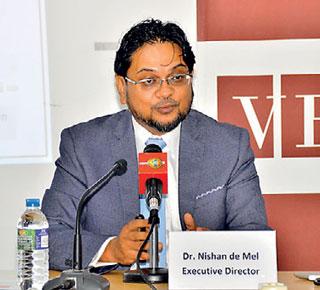
Nishan de Mel |
The current labour laws make it mandatory for the private sector employers to offer 12 weeks of fully-paid maternity leave. However, the outcome of the effort has made it expensive to higher women, placing women in the 20-40 age group at disadvantage.
The Annual Labour Force Survey (2018) reveals that women in this age group are 6.6 times more likely to be unemployed than women outside this group.
“Moving towards the tax deductible avenue will be a small shift in policy direction. It is only a relief and there is no actual spend taken over by the government,” said Verité Research Executive Director Nishan de Mel.
According to research carried out by the think tank, tax relief for MBLs would cost Rs.4.2 billion, which amounts to 0.25 percent of tax revenue.
The figure is significantly less, compared with the expenditure on other welfare programmes such as the fertiliser subsidy (Rs.26.9 billion), Samurdhi (Rs.39.2 billion) and employment and training for unemployed graduates (Rs.58.7 billion). In Budget 2019, the Finance Ministry did include a proposal to partially support MBLs via tax deductibility. However, no implementation was made in this regard; the topic was not pulled up for consideration since either.
“It is a small step for the government but will be a large leap for the country, as it will support women into employment and improve their contribution to the economy,” added de Mel.
In the global scenario, a total of 129 states support MBLs, out of which 96 are fully supported and 33 are partially supported.
It is observed that majority of the nations in the African region, South Asia and the Middle East, are yet to take a progressive step in this regard. Sri Lanka falls in the category of extending no state support for MBLs in the South Asian region, along with India and Bangladesh.
20 Jun 2026 1 hours ago
20 Jun 2026 1 hours ago
20 Jun 2026 2 hours ago
20 Jun 2026 3 hours ago