19 Nov 2025 - {{hitsCtrl.values.hits}}
By Shannine Daniel
|
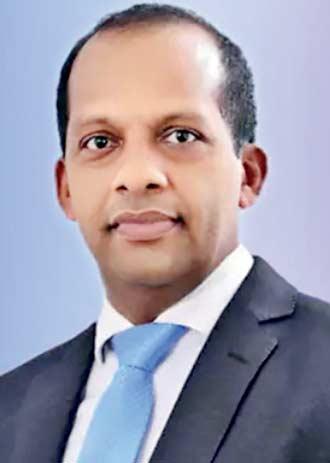
Hasitha Radella |
In line with the government’s robust commitment towards digitalisation, the Inland Revenue Department (IRD) can conduct interviews and administrative tax reviews online to save time and be more cost effective, KPMG Sri Lanka Tax and Regulatory Partner Hasitha Radella suggested.
He also called for digital improvements at the Tax Appeals Commission, as currently all submissions are done manually and digitalisation can expedite the relevant processes.
He gave these recommendations at a recent panel discussion on the 2026 budget proposals, organised by KPMG Sri Lanka.
At the second hearing of the 2026 national budget, President Anura Kumara Dissanayake said the IRD would be modernised through the implementation of the upgraded Revenue Administration Management Information System (RAMIS 3.0).
The upgraded system aims to improve tax compliance and expand the tax base.
Moreover, the government is to introduce a national e-invoicing system with an Application Programming Interface (API) mechanism to connect the taxpayers’ Enterprise Resource Planning (ERP) systems and RAMIS 3.0.
The government expects this initiative to be completed and implemented by the end of this year.
In the first phase of this project, the system will cover export-oriented enterprises and integration with selected pilot companies via the API mechanism.
In the second phase, all Value Added Tax (VAT)-registered taxpayers will be included and in the third phase, the e-invoice system will be deployed through point-of-sale machines. This will be done to record transactions in real time, improve tax compliance and enhance the efficiency and transparency of VAT administration through a completely web-based platform.
Dissanayake also said that the government revenue is projected to exceed 15.3 percent of GDP next year and he hopes it will increase to 20 percent of GDP in the long run.
He also revealed that the government plans to gradually adjust the direct-to-indirect tax ratio from 25:75 to 40:60, to ensure a more progressive and equitable tax structure.
In 2026, primary expenditure will be maintained within the 13 percent limit, while public investment will be maintained at a minimum of 4 percent of GDP, to strengthen social safety nets for the most vulnerable and develop essential infrastructure.
Moreover, Budget 2026 has proposed for all branches of the IRD to be relocated to a central location, with Rs.2 billion to be allocated to establish a new single office for the IRD.
This is to provide the taxpayers with a simpler, more reliable and efficient service, while also strengthening the tax collection process in a sustainable manner, Dissanayake opined.
18 Jun 2026 16 minute ago
18 Jun 2026 19 minute ago
18 Jun 2026 26 minute ago
17 Jun 2026 9 hours ago
17 Jun 2026 9 hours ago