31 May 2025 - {{hitsCtrl.values.hits}}
The consumer prices in the Colombo district fell 0.7 percent in the 12 months through May 2025, decelerating from the 2.0 percent decline recorded in April, as the country nears the end of its deflationary stretch that began in September last year, with base effects catching up.
The prices measured on a monthly basis by the Colombo Consumer Price Index meanwhile rose 0.8 percent in May, following a 0.2 percent decline in April, reflecting the persistence of price pressures in the current context.
The Central Bank last week cut its Overnight Policy Rate, its key policy rate, by 25 basis points to 7.75 percent, citing that the future inflation path appears slower than the previously anticipated, thus giving it room to ease monetary policy further.
The Central Bank expects inflation to turn positive around the early third quarter, before reaching its medium-term target of 5.00 percent.
The Central Bank said its inflation path factors in the upcoming electricity tariff revision, as it assumes cost-recovery pricing in its projections.
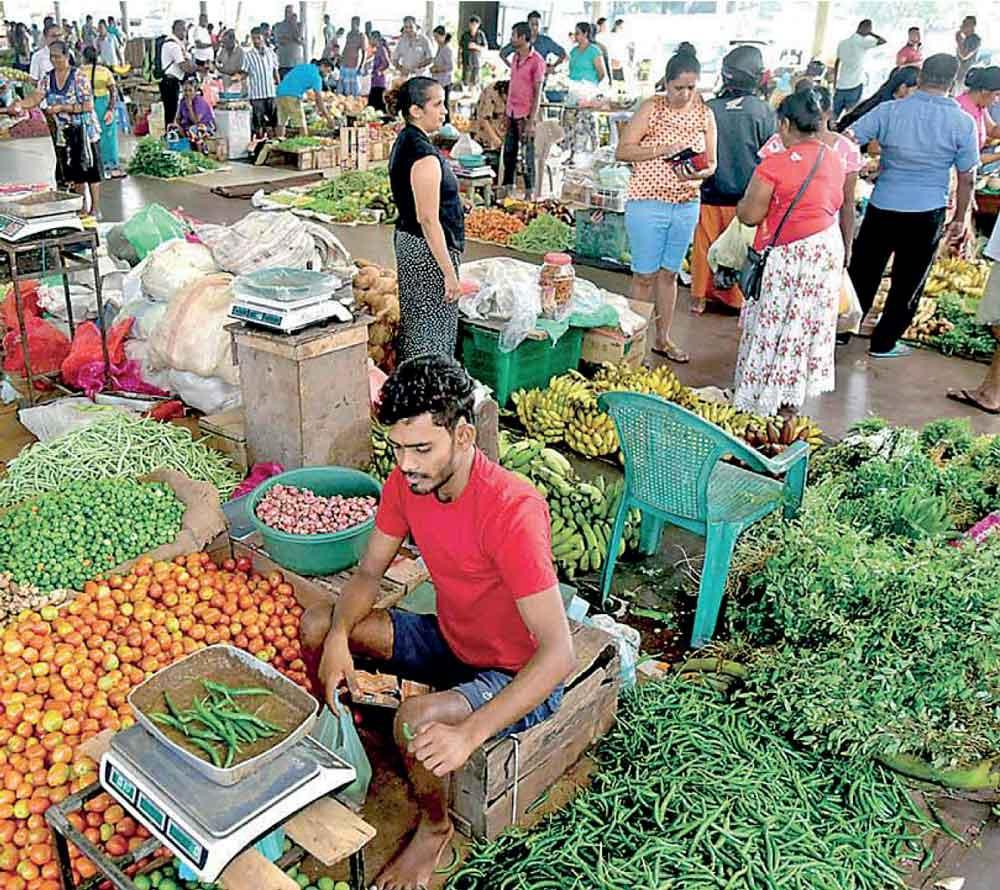
The food prices meanwhile rose at a relatively faster pace of 5.2 percent in the year through May 2025, up from 1.3 percent in April.
The monthly food prices jumped 2.7 percent, reversing the 0.3 percent decline recorded in April, indicating that the food prices rose in May over April levels.
The prices of rice, fresh fish, dried fish, coconuts, coconut oil, vegetables, potatoes and similar staples increased.
The price of salt rose notably, as the country is experiencing a salt shortage and the government has taken steps to import supplies.
Conversely, the prices declined for commodities such as yogurt, eggs, fresh fruit, big onions, green chilies and the like.
The non-food prices fell by 3.3 percent from a year ago, slightly easing from the 3.6 percent decline recorded in April.
The monthly non-food prices slid 0.1 percent, unchanged from the rate seen in April.
This was mainly due to the downward revision in the petrol and diesel prices as well as reduced spending on house maintenance and reconstruction activities.
However, the prices have increased for spending at restaurants and hotels and to a lesser degree in recreation and culture, healthcare and household gas.
There could be an uptick in non-food inflation from June, if electricity tariffs are increased.
Meanwhile, the so-called core prices, which exclude the often-volatile food, beverage and transport items, rose by 1.2 percent, up from 0.8 percent in April.
13 Jun 2026 2 hours ago
13 Jun 2026 29 minute ago
13 Jun 2026 25 minute ago
13 Jun 2026 34 minute ago
13 Jun 2026 48 minute ago