03 May 2025 - {{hitsCtrl.values.hits}}
By Nishel Fernando
|
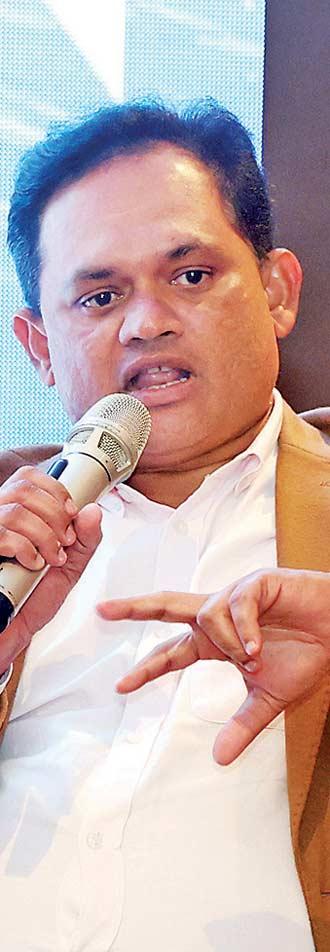
Pushpika Jamnadhira |
A proposed increase in US tariff rates on rubber products could devastate Sri Lanka’s export sector, risking 150,000 livelihoods and destabilising rural economies, Sri Lanka Association of Manufacturers and Exporters of Rubber Products (SLAMERP) Chairman Pushpika Jamnadhira cautioned.
Jamnadhira urged the government to secure equitable tariff terms to avert industry collapse.
Sri Lanka’s rubber sector, which exports gloves, solid/pneumatic tyres, and tyre components, faces severe competitive disadvantages due to stark tariff imbalances.
While China faces higher US tariffs, competitors like Malaysia (24 percent on gloves), Thailand, Vietnam, and India (26 percent on solid tyres) benefit from lower rates compared to Sri Lanka’s 44 percent tariffs.
“A 20 percent gap with Malaysia in gloves and an 18 percent gap with India in tyres are insurmountable. Without parity, our exports face disaster,” Jamnadhira stressed, while addressing a panel discussion organised by the Sri Lanka–USA Business Council recently.
The industry, operating on razor-thin margins, is already grappling with US buyer demands for price cuts despite a recent 10 percent increase.
“We’ve absorbed 2-3 percent reductions for loyal clients, but further cuts are impossible,” Jamnadhira explained. He emphasised that the Trump administration’s resistance to domestic price hikes exacerbates pressure, forcing exporters to rethink market strategies.
With 150,000 workers reliant on the rubber industry from tapping to manufacturing, a sector collapse would cripple rural economies.
“Rubber tappers lack alternatives; shifting to new crops could take a decade,” Jamnadhira noted. Factories, representing billions in investments, require 8–9 months to retool for new products, while finding new markets for premium US-bound goods would disrupt economies of scale.
Jamnadhira praised Sri Lanka and India’s joint regional negotiation efforts, citing reports of India nearing a tariff deal. He urged Colombo to prioritise employment and rural stability in talks, leveraging the US’ trade surplus with Sri Lanka.
“The US must grant us the consideration given to India and China to protect our 30 percent export share,” he argued.
Losing the US market, a benchmark for premium pricing, would destabilise Sri Lanka’s product portfolio.Diversification remains a slow, costly process, leaving immediate tariff relief as the only viable safeguard. As negotiations intensify, Sri Lanka’s rubber sector hangs in the balance, with livelihoods and economic stability contingent on bridging tariff divides.
“This isn’t just about tariffs. it’s about people. The government must act decisively,” he concluded.
21 Jul 2026 27 minute ago
21 Jul 2026 29 minute ago
21 Jul 2026 2 hours ago
21 Jul 2026 2 hours ago
21 Jul 2026 3 hours ago