17 Jun 2025 - {{hitsCtrl.values.hits}}


The current shortage of salt is due to the lack of domestic salt production. The picture shows the Hambantota saltern which has not made proper preparations to have salt beds ready to aid production
By Prageeth Sampath Karunathilaka and Sudharika Gurusinghe
There is currently a shortage of salt in the market, and the authorities have cited various reasons for it. However, during a visit made by this newspaper to Hambantota saltern last December, this writer observed that no steps had been taken by the relevant authorities to prepare the salt beds for production prior to the rainy season, nor were other essential preparatory measures in place. At the time, the saltern contained only iodised salt, which was being processed for sale to industrial sectors. This writer was informed that, in the event of a future shortage of salt, the authorities planning to crush the iodised salt and release it to the market under the brand name Lak Lunu.
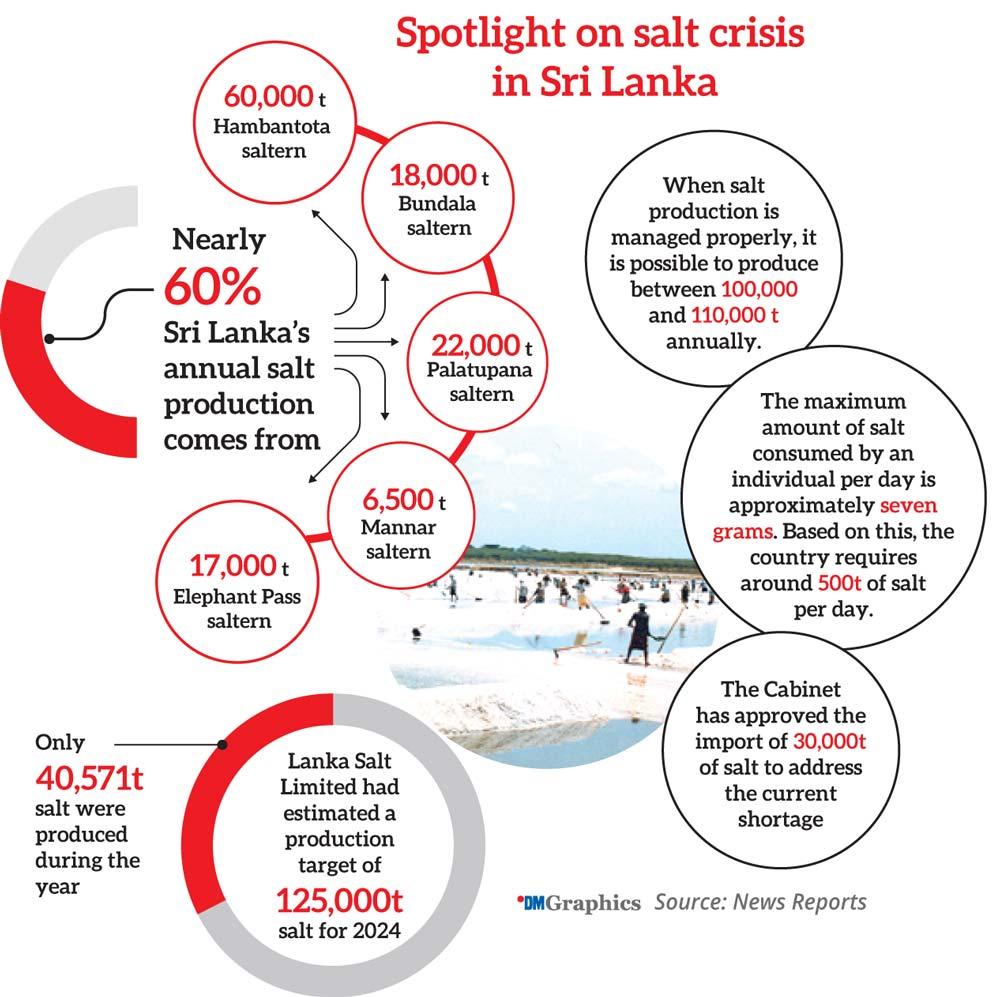
Nearly 60 percent of Sri Lanka’s annual salt production, approximately 60,000 metric tons, comes from Hambantota saltern. In addition, Bundala saltern produces around 18,000 metric tons, while Palatupana saltern contributes about 22,000 metric tons. Additionally, 6,500 metric tons of salt are expected from Mannar and 17,000 metric tons from the Elephant Pass saltern.
Although Lanka Salt Limited had estimated a production target of 125,000 metric tons of salt for 2024, it was unable to meet that goal. Only 40,571 metric tons of salt were produced during the year, due to adverse weather conditions. A salt shortage was highly likely that year, but the situation was averted due to a surplus of approximately 60,000 metric tons carried over from 2023.
Due to the adverse weather conditions that affected salt production in 2024, there was a risk of another salt shortage occurring in 2025. Therefore, a proper production plan should have been prepared for the year 2025. However, due to weaknesses in the administration, the basic steps necessary for salt production, such as properly preparing the salt beds on time, weren’t taken. Employees at Hambantota saltern pointed out that the main reason for the current salt shortage is a delay in the production process which in turn contributed to missing all opportunities of benefiting from the season earmarked to produce salt. The delay continued until the arrival of the rainy season. However, they also stated that the authorities tried to cover up administrative shortcomings by claiming that salt production was not possible due to adverse weather conditions.
Current Chairman of Lanka Salt Limited, D. Nandathilaka, recently made a statement to the media that aligns with claims made by the employees. He noted that salt production was disrupted due to a rainfall during January, February and March, making it impossible to achieve a proper harvest.
However, during a visit by this newspaper to the Hambantota saltern last December, we observed that salt production had been abandoned without any clear plan in place. The salt beds had not been prepared in time to facilitate salt production, and as a result, the expected salt harvest couldn’t be secured before the arrival of the rainy season. When signs of a salt shortage surfaced in December, the authorities informed the public that the salt production process had been disrupted due to flooding in the saltern lands. However, the employees confirmed that the salterns had not been affected by the threat of floods. According to them, the real issue was that no salt production had taken place—leading to a shortage; a matter which the authorities failed to address. Investigations carried out by this newspaper revealed that the area hadn’t received a significant rainfall in recent times. These employees also added that the rainfall had no direct impact on the salt production process.
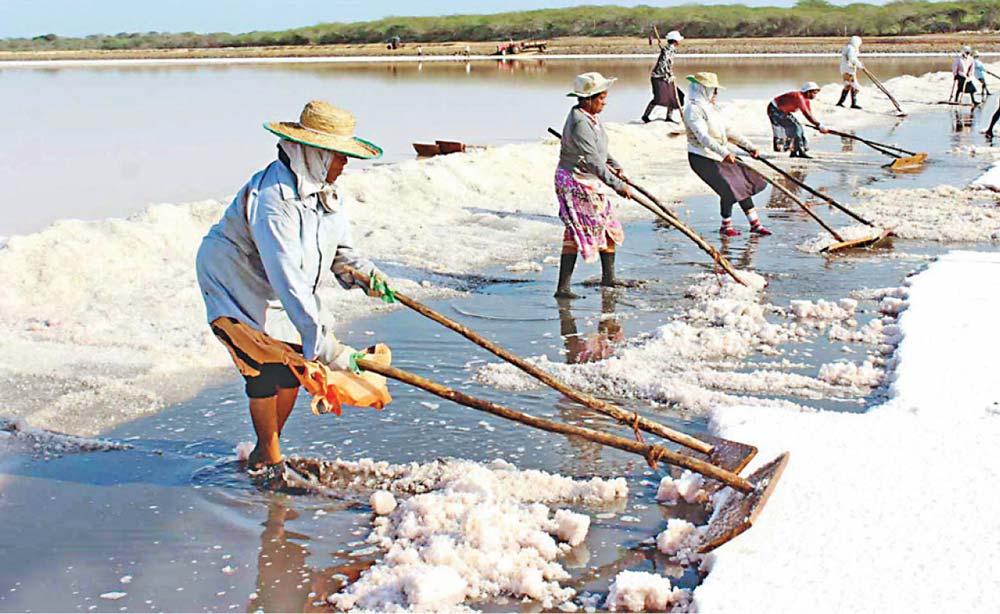
When salt production is managed properly, it is possible to produce between 100,000 and 110,000 metric tons annually
Even though adverse weather may occur at any time and cause disruptions to salt production, it has never been a reason for a nationwide salt shortage. This is because the administrators at the saltern as a practice take steps to produce salt in a timely manner and stores any surplus. Employees said that the current shortage is due to poor management and not weather conditions. They emphasised that if salt production had been carried out as scheduled, such a shortage would not have occurred.
No salt production since December
The Hambantota saltern is expected to produce 100,000 metric tons of salt this year. According to this estimate, 25,000 metric tons should have been produced by now. However, the authorities reported that only 10,000 metric tons had been produced so far. Meanwhile, the employees claimed that not a single grain of salt has been produced since December.
Even though Hambantota saltern was closed for about six months- due to the tsunami catastrophe- there was no need to import salt from abroad. This was because the country had a surplus of salt. There was another reason for the lack of salt production at Hambantota last year: the saltern was among the institutions operating at a loss. It was ranked fourth among the loss-making institutions. As a result, the previous government had planned to sell the Hambantota saltern. Employees claimed that, due to this, the authorities failed to take proper steps to plan the salt production last year.
Routine activities such as pumping seawater to produce salt, allowing this water to crystallise as salt and hiring workers have not taken place during recent times. Salt stocks stored in the saltern were released to the private sector without hesitation, just weeks before the presidential election. The current shortage of salt is due to the lack of domestic salt production. In recent times, salt containing dust and shell fragments has also been found in the market. This is because salt was released without meeting proper quality standards.
When salt production is managed properly, it is possible to produce between 100,000 and 110,000 metric tons annually. However, the expected salt harvest for 2024 wasn’t achieved, due to the impact of climate change.
The combined salt yield for both seasons amounted to only 40,571 metric tons. This reduction is another contributing factor to the current salt shortage. At present, Hambantota saltern doesn’t have a surplus of salt. In contrast, in previous years, it was possible to supply salt throughout the year without experiencing shortages. Employees emphasise that if salt production had been carried backed by proper management, this shortage could have been avoided.
Salt has been released to the market after being classified in keeping with the geography of production sites such as from Bundala, Palatupana and Hambantota salterns. As a result of these classifications, it was easy to obtain ISO certification for the salt produced. Under this certification scheme, ISO 9001 and ISO 20000 were awarded to Lak Lunu produced by the Hambantota Saltern. However, in recent times, the ISO 20000 certification was not printed on Lak Lunu salt packets. According to employees, this was due to releasing contaminated salt to the market. This salt stocks contained dust and shell fragments. This development led to the quality certification of salt being withdrawn. However, an investigation carried out by this newspaper revealed that the ISO 20000 certification was removed from the packaging at the request of the Sri Lanka Standards Institute.
Low-quality salt returned to Hambantota saltern
Salt is classified into four grades: Grades 1 and 2 are used for consumption, while Grades 3 and 4 are reserved for industrial purposes. Currently, the Hambantota saltern has no stocks of Grade 1 and 2 salt. The existing quantity of Grade 1 salt is insufficient to meet consumption needs.
The remaining stock consists of industrial-grade (Grade 3 and 4) salt. In the past, due to the salt shortage, industrial salt (Grades 3 and 4) was washed, ground into powder, and released to the market. As a result, ‘Lak Lunu’, had its quality compromised. The reason was that crushed shell particles were mixed into the salt during processing. This led to packets of low-quality salt being returned to the Hambantota saltern.
Lak Lunu had earned a strong reputation among local consumers for its purity and high quality. However, the way it was produced in recent times has made this institute compromise on the standard of the product. Last year, cabinet approval was granted to import 30,000 metric tons of salt to address the shortage. However, only 15,000 metric tons were actually imported. If the salt stocks available at the saltern had been preserved, the salt shortage could have been prevented. Instead, the sale of existing stocks to the private sector worsened the shortage. Grade 1 and 2 salt produced at Palatupana was sold to the private sector at a time when a national shortage was becoming apparent. Furthermore, there was no proper salt production during either season last year. The authorities now point out that rainfall has contributed to reduced salt production this year as well.
New technologies can be adopted in salt production to increase both yield and quality. However, employees of the Hambantota saltern noted that due to administrative blunders in the past, these technologies were not implemented. Salt produced using water from the Kolangala area often contains shell fragments. Although proposals were made to address this issue, the then authorities didn’t respond well. Due to these developments, a complete collapse of salt production in Sri Lanka may not be far off.
Once again, the Cabinet has approved the import of 30,000 metric tons of salt to address the current shortage. While this may help ease the situation to some extent, it is uncertain whether it would be sufficient to meet the country’s demand for salt. This concern arises because, even now, there has been no proper preparation of salt beds at Hambantota saltern, nor is there any systematic process in place to begin salt production. Another reason for the failure in salt production is the malfunctioning of water pumps at a time when seawater was ready to be released into the salt beds in Hambantota. The pumps—procured at a high cost—have proven to be of poor quality and failed to operate effectively. Employees maintained that due to these substandard pumps the salt production process was significantly disrupted.
When this newspaper contacted Lanka Salt Limited Chairman D. Nandathilaka, he abruptly ended the call, citing urgent duties at the Ministry of Finance.
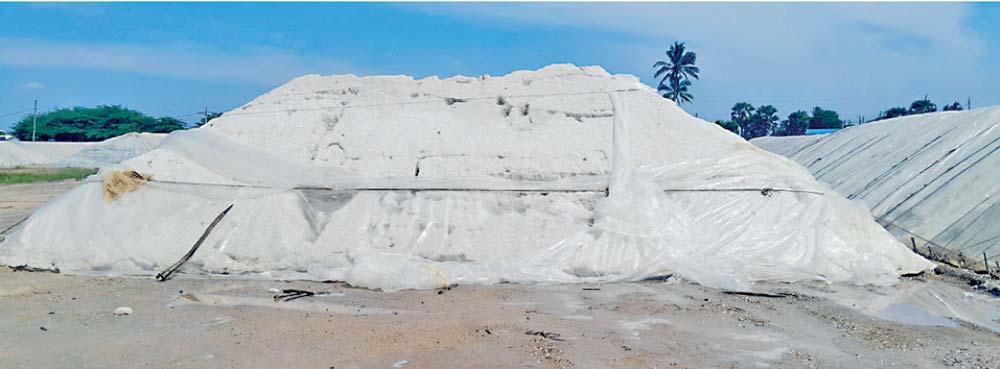
Salt is classified into four grades: Grades 1 and 2 are used for consumption, while Grades 3 and 4 are reserved for industrial purposes
 Speaking regarding salt crisis, Minister of Trade, Commerce, Food Security and Cooperative Development Wasantha Samarasinghe stated the following at a media briefing: “The maximum amount of salt consumed by an individual per day is approximately seven grams. Based on this, the country requires around 500 metric tons of salt per day. However, Sri Lanka is not a country incapable of meeting this requirement,” Minister Samarasinghe said.
The minister explained that the current shortage has arisen due to the collapse of salt production caused by continuous rainfall in recent months. As a result, the government has decided to import salt to address the situation. The Minister further noted that approval has been granted to import and release salt to the market until domestic production is sufficient to meet the demand.
09 Jun 2026 2 minute ago
09 Jun 2026 8 minute ago
09 Jun 2026 11 minute ago
09 Jun 2026 16 minute ago
09 Jun 2026 21 minute ago