Reply To:
Name - Reply Comment
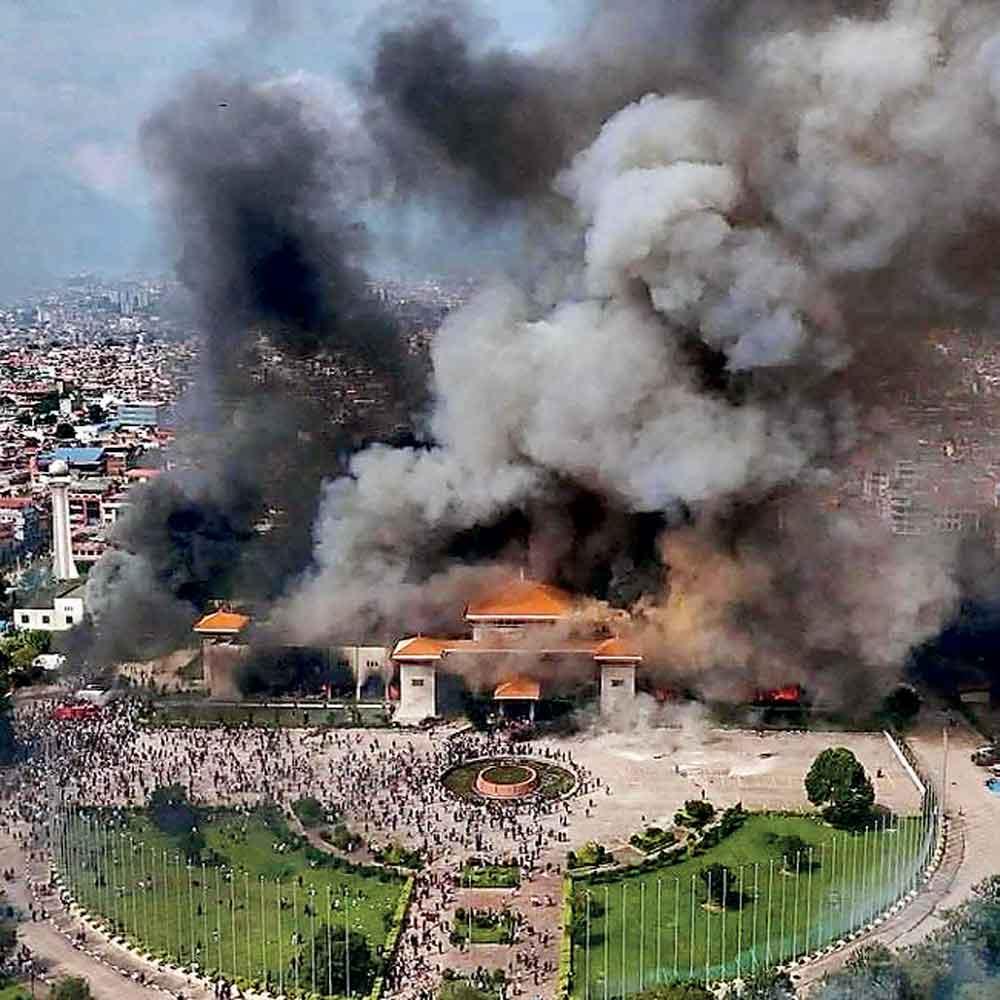
Nepal plunged into a deep political crisis on Tuesday as several top government officials, including President Ram Chandra Paudel and Prime Minister K. P. Sharma Oli, tendered their resignations following days of violent protests that left at least 19 people dead.
The unrest, led largely by the country’s Gen Z youth, erupted after the government banned 26 social media platforms - including Facebook, WhatsApp, Instagram, and YouTube—citing their failure to register locally. What began as demonstrations against digital restrictions quickly escalated into a broader uprising against corruption, nepotism, and economic stagnation, news agencies reported.
Protesters set fire to multiple government buildings, including parts of the Parliament and the Supreme Court, as anger boiled over across Kathmandu and other major cities. Residences of political leaders, cabinet ministers and official buildings were set ablaze by the angry youth with videos circulating online showing Finance Minister Bishnu Prasad Paudel being chased and assaulted in the streets. Even party offices and police stations have not been spared.
Former Prime Minister Sher Bahadur Deuba and Foreign Minister Arzu Rana Deuba were reportedly injured when their home came under siege. Footage shows the former Prime Minister Sher Bahadur Deuba bleeding from his face in the aftermath of the attacks.
Authorities responded with curfews, mass deployments of security forces, and a state of emergency in the capital. But the heavy-handed crackdown only fuelled further outrage, drawing condemnation from international rights groups for the excessive use of lethal force.
The government has since lifted the controversial social media ban and promised compensation for victims’ families, as well as an investigation into the violence. A high-level panel has been given 15 days to report on the causes and accountability for the bloodshed. However, in a written statement following the resignation of the President, the army warned that the country’s security forces were committed to preserving law and order. It was not clear if the army, which so far has stayed in its barracks, would be mobilised to help after police failed to control the situation.